Egg Freezing at FSAC: What to Expect from the Process
Egg freezing is a multi-step process, but each step is more manageable than it looks from the outside. Below, we’ll walk you through what to expect, in order, from your first consultation through storage.
Whether you are freezing eggs for medical reasons or as a proactive way to keep your family-building options open, understanding the process ahead of time can make the decision feel less overwhelming.
Your Initial Consultation and What to Expect at FSAC
Your first visit will involve a full review of your medical history, bloodwork, and an ultrasound so your provider can check your ovarian reserve, an estimate of how many eggs you have remaining. The bloodwork at this visit typically checks your anti-Mullerian hormone (AMH) level, one of the most reliable markers of how many eggs you have remaining.
During the ultrasound, your provider counts your antral follicles, the small resting follicles visible in each ovary, which gives your team a second, complementary estimate of your ovarian reserve. From there, your FSAC team will build a plan tailored to your specific results, and take the time to walk you through what it means for you personally, since no two ovarian reserves or timelines look the same.
Your plan will spell out which medications you will use, at what dose, and how long your stimulation phase is expected to run, based specifically on your own ovarian reserve results.
Most people move into the stimulation phase within a cycle or two of this initial visit, once your team has reviewed your results and confirmed your protocol.
Ovarian Stimulation: Growing Multiple Eggs
For roughly 10 to 14 days, you will self-administer daily injectable hormone medications, typically follicle-stimulating hormone (FSH) alone or combined with luteinizing hormone (LH), to help your ovaries grow multiple eggs at once, since an unmedicated cycle typically produces only one. Your team will likely ask you to come in for regular monitoring visits, where they use ultrasound and bloodwork to track how your follicles are growing and adjust your medication along the way.
Self-injecting can feel intimidating at first, but your nursing team will walk you through the technique before you start, and most people feel confident within the first day or two.
Ovarian hyperstimulation syndrome (OHSS) is a known but uncommon risk during this stage, occurring when the ovaries respond more strongly than expected to stimulation medication. The regular monitoring throughout your cycle exists largely to catch it early, so your team can adjust your protocol quickly if it comes up.
If you notice symptoms like significant bloating, nausea, or rapid weight gain during stimulation, contact your care team right away so they can check on you.
Egg Retrieval and What Happens After
For the full walkthrough of what happens during retrieval itself, from sedation through the procedure, see our guide to the egg retrieval process.
Egg retrieval is a brief outpatient procedure that takes about 15 to 30 minutes from start to finish, according to ASRM, and is performed under light anesthesia, so you stay comfortable throughout. Most people rest in our recovery suite for about 45 to 60 minutes, then go home the same day. Expect some mild cramping or bloating for a day or two afterward.
Once retrieved, your eggs are assessed by an embryologist in FSAC’s on-site IVF lab and frozen that same day. From there, the next step is specific to egg freezing.
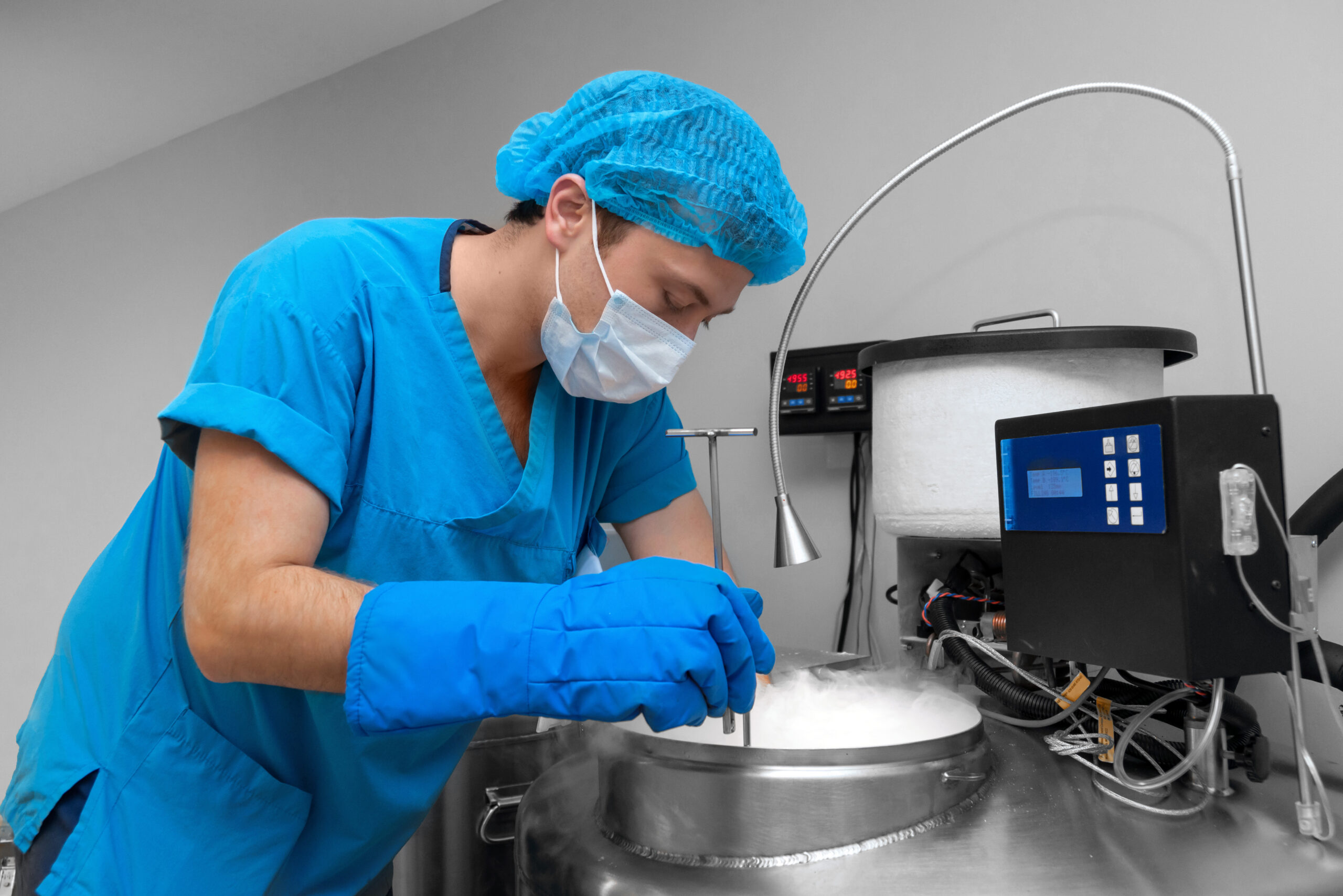
Our embryology team will vitrify your eggs, flash-freezing them with a state-of-the-art technique that protects them at the cellular level, and move them into storage in liquid nitrogen within hours of retrieval.
Does Insurance Cover Egg Freezing in California?
SB 729 and the Medical-vs-Elective Distinction
California’s SB 729 requires many large-group health plans to cover fertility preservation when medically necessary, such as before cancer treatment, but it does not require coverage for non-medical, elective egg freezing.
Both medical and personal reasons for freezing your eggs are valid. Choosing egg freezing on your own timeline can be a powerful way to preserve your fertility and future family-building options. You don’t need to feel rushed into the decision or explain your reasons to anyone.
For self-pay individuals not covered under SB 729, FSAC’s Fertility Access Initiative currently offers 1,300 dollars off egg freezing.
How Long Does the Whole Process Take?
From your initial consultation through retrieval, the whole process typically takes two to four weeks, with most of that time spent in stimulation and monitoring.
Everyone’s protocol looks a little different, so your exact timeline will depend on how your body responds. Most people are ready to resume normal activities within a day or two of retrieval, though your care team will let you know what to expect based on your own cycle.
Once frozen, your eggs can remain viable indefinitely, according to ASRM, giving you real flexibility in your own timeline. Reaching your personal goal may take more than one egg retrieval, since age affects both how many eggs are retrieved and how many are likely to be usable later.
There is not enough evidence yet to set an exact number of eggs needed at any age, though starting younger generally means needing fewer eggs to reach a similar chance of success.
Whatever your specific timeline looks like, our team is here to walk through every step alongside you, beyond just what fits into an article.
Ready to Talk Through What Egg Freezing Would Look Like for You?
Learning about egg freezing is already a meaningful step toward the future you want, and you don’t have to figure out the rest on your own. The best way to see what the process would look like for you is a conversation with FSAC’s team.
When you meet with us, we’ll take the time to understand your goals, walk you through timing and monitoring, and help you understand exactly what applies to your situation under California law. You’ll leave with a clear picture of your options, and the freedom to decide what feels right for you, on your own timeline.
Contact FSAC to schedule your consultation.